TREATMENTS 19 AUG 2025

RF Microneedling vs Microneedling in Singapore: Treatments for Acne Scars and Enlarged Pores

RF Microneedling vs Microneedling in Singapore: Treatments for Acne Scars and Enlarged Pores

Microneedling and RF microneedling are two widely used techniques for improving acne scars, fine lines, enlarged pores, and overall skin texture. Both work by stimulating collagen production and promoting skin remodelling—but the way they function, the devices involved, and whether the procedure is performed by a doctor or therapist can significantly affect outcomes.


In Singapore, microneedling treatments are available in both medi-spas and medical aesthetic clinics. However, there are key differences in device classification, treatment depth, and safety protocols. RF microneedling can be performed using different device types. Only medical-grade RF microneedling systems notified to the Health Sciences Authority (HSA) are approved for use in medical clinics under doctor supervision. These systems allow precise depth control and customised energy delivery for more advanced skin concerns. In contrast, aesthetic-grade devices used in non-medical settings typically operate at fixed, lower-intensity parameters and are intended for superficial improvements. They are not designed for treating deeper scars or complex skin conditions, and their safety profiles differ from those of medical-grade systems.


In this guide, we will cover:


  • The key differences between traditional microneedling and RF microneedling
    How each technique works, their depth of action, and how RF energy adds a thermal component for enhanced collagen remodelling.
  • Doctor-administered vs therapist-administered treatments and what sets them apart
    Why clinical oversight matters for safety, parameter selection, and risk reduction in different skin types.
  • How treatment choices are tailored based on scar severity, skin type, and desired downtime
    Factors considered during consultation to determine whether mechanical stimulation alone is sufficient or if RF-enhanced microneedling is recommended for deeper structural concerns.

What Is Microneedling?

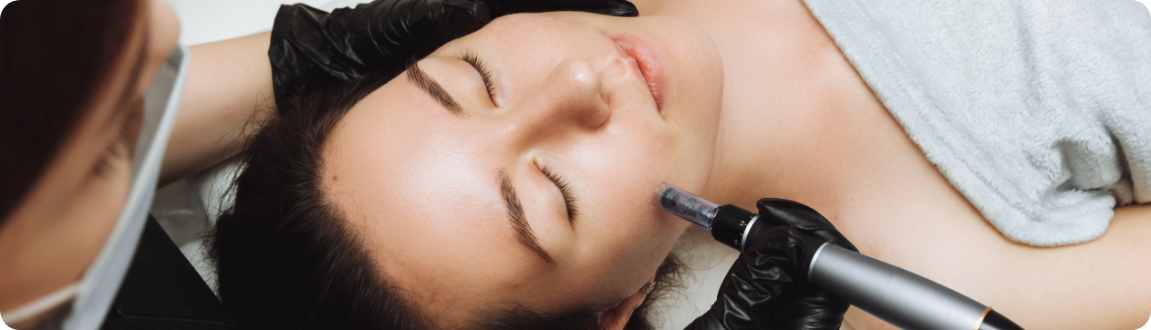
Microneedling uses ultra-fine needles to create controlled micro-injuries in the skin. These tiny punctures stimulate a wound-healing response, promoting the production of collagen and elastin—two key components that support skin structure and firmness.


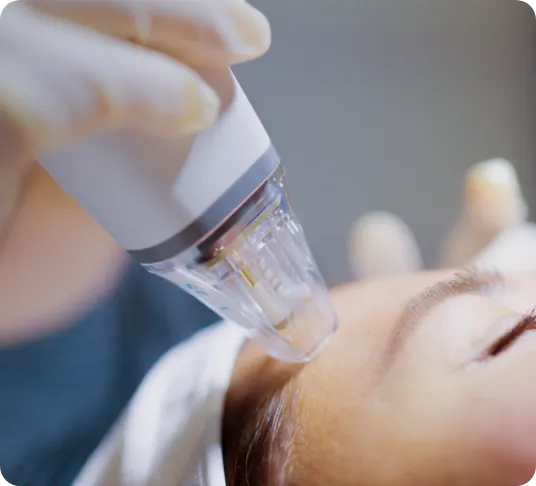
The treatment is typically carried out using a motorised handheld device fitted with a sterile needle cartridge. Depending on the skin concern, the needles may be adjusted to penetrate between 0.25 mm and 2.5 mm. This allows targeted stimulation in the upper dermis without removing surface skin.


Microneedling is commonly used to:


  • Improve mild acne scars
  • Reduce fine lines
  • Enhance general skin texture

A systematic review of 33 clinical studies has demonstrated its role in acne scar improvement[3].


While often referred to as “collagen induction therapy,” microneedling works best on superficial to moderate concerns. It does not involve heat or energy-based stimulation, and its results depend primarily on natural dermal regeneration over time.


This technique may be recommended for individuals seeking gradual textural improvement with minimal downtime, especially when treating surface-level concerns.


What Is RF Microneedling?

Radiofrequency (RF) microneedling, is a procedure that combines the controlled micro-injuries of microneedling with the targeted delivery of radiofrequency energy into the dermis. The addition of thermal stimulation allows this technique to address deeper textural concerns that may not respond fully to mechanical stimulation alone, as discussed in critical reviews on RF microneedling[2].


During treatment, insulated or non-insulated microneedles create channels in the skin while simultaneously delivering heat energy to selected dermal depths. This process stimulates neocollagenesis (new collagen formation), enhances dermal tightening, and may modulate sebaceous gland activity—particularly relevant in oil-prone skin.


RF microneedling is commonly used to:


  • Treat moderate to deep acne scars
  • Reduce visible pores, especially in oily or resilient skin
  • Improve skin firmness in early laxity

The effectiveness of this treatment depends on how energy levels, pulse durations, and needle depths are adjusted. These settings should be selected based on your skin thickness, scar profile, and risk of pigmentation.


Doctor-Administered vs Therapist-Administered RF Microneedling

RF microneedling may be performed in medical clinics under doctor supervision or in aesthetic settings by non-medical therapists. While the procedure name is similar, the level of precision and safety differs significantly.


Key Differences


  • Deeper Needle Penetration and Higher Energy Settings
    Doctors are trained to use adjustable depth settings and higher RF energy to reach deep dermal layers. This is necessary for concerns like rolling scars, structural laxity, or stretch marks.
  • Customisation Through Clinical Assessment
    Doctors evaluate skin thickness, scar morphology, and pigmentation risk to tailor parameters for safety and efficacy. They can also integrate clinical-grade serums or injectables during the session for enhanced outcomes.
  • Doctor-Supervised Safety
    Medical supervision ensures prevention and management of complications such as infection, PIH, or prolonged inflammation.
  • Licensed Medical Devices
    Medical settings use HSA-notified or licensed systems that offer advanced features like dual RF modes and precise energy control—capabilities typically unavailable in non-medical environments.
  • Potential for Combined Treatment
    Doctors can combine RF microneedling with scar release techniques or regenerative injectables when clinically indicated.

Therapist-Administered Microneedling / RF Microneedling


  • Shallower needle depths and lower energy settings within non-medical safety limits
  • Aesthetic-grade devices with limited RF output and fewer adjustment options
  • Performed by non-medical professionals without authority to diagnose or manage complications

Key Differences Between RF Microneedling and Microneedling

Microneedling and RF microneedling both use fine needles to create controlled micro-injuries in the skin. This process stimulates the skin’s natural repair mechanisms, particularly the production of collagen and elastin. RF microneedling adds a second element—radiofrequency energy—to introduce thermal stimulation deeper within the dermis.


The inclusion of heat enhances collagen contraction and dermal remodelling, making RF microneedling more suitable for concerns involving deeper skin structures, such as long-standing acne scars or enlarged pores due to oil gland activity.


It is more clinically relevant to understand RF microneedling as an enhanced version of microneedling, rather than comparing them as entirely separate modalities. Selecting between the two depends on the type of scar, skin thickness, sebaceous activity, and how your skin has responded to previous treatments.


Comparison Summary: Microneedling vs RF Microneedling

Scroll right to view more

Feature Microneedling RF Microneedling
Energy Type Mechanical stimulation only Mechanical + RF thermal energy
Penetration Depth ~0.25 – 2.5 mm Up to ~3.5 mm (device-dependent)
Primary Action Collagen induction via micro-injury Collagen induction + heat-induced tightening
Suitable Concerns Mild scarring, surface texture Deep scarring, enlarged pores, oil-prone skin
Comfort Level Mild (topical anaesthesia) Moderate (topical + optional nerve block)
Downtime 1–3 days redness/flaking 3–5 days redness, swelling, possible crusting
Suitability (Skin Type) All skin types (Fitzpatrick I–VI) Fitzpatrick III–V (with insulated needles)

Which Works Better for Acne Scars?

Acne scars vary in depth and structure, from shallow surface irregularities to deep, tethered depressions. Because microneedling stimulates collagen mainly in the upper dermis, it is best suited for mild or superficial scars. RF microneedling can reach deeper layers while adding thermal stimulation, making it more effective for rolling scars, fibrotic boxcar scars, and cases linked to sebaceous activity.

The table below summarises common concerns, recommended needle depths, and typical approaches:

Microneedling & RF Microneedling Treatment Guide by Skin Concern

Scroll right to view more

Skin Concern / Scar Type Description Typical Needle Depth Considered Approach
Rolling Scars Soft, sloping depressions; often tethered 2.0 – 3.0 mm RF microneedling ± subcision for deeper release
Boxcar Scars Broad, sharply defined depressions 1.5 – 3.0 mm Microneedling (shallow) or RF microneedling (deeper)
Ice-Pick Scars Narrow, deep tracts tapering into dermis Adjunct approach TCA CROSS ± microneedling in surrounding tissue
Mixed Acne Scars Combination of multiple scar types Varies by scar type RF microneedling combined with layered modalities
Atrophic Acne Scars (Mild) Superficial depressions 1.5 – 2.0 mm Microneedling or RF microneedling
Stretch Marks Dermal thinning and collagen disruption 2.0 – 3.5 mm Microneedling ± RF for deeper tissue stimulation
Skin Tightening / Laxity Mild sagging or early loss of firmness 0.5 – 1.5 mm RF microneedling for heat-induced tightening
Collagen Stimulation / Anti-Ageing Fine lines, early textural changes 0.5 – 1.0 mm Microneedling for surface rejuvenation

Why depth matters: Scars and stretch marks involve the dermis, so treatments targeting this layer (e.g., RF microneedling at 2.0–3.5 mm) are often required for meaningful improvement. Shallower depths are reserved for surface irregularities or anti-ageing purposes.

Combination Approaches


For complex concerns, RF microneedling can be paired with adjunctive methods such as subcision for tethered scars or TCA CROSS for ice-pick scars. These combinations aim to treat multiple scar types in a single session or staged plan without repeating redundant examples.


  • Deeper than 2.0 mm is typically only performed by doctors using medical-grade RF microneedling devices.
  • Scars and deep skin damage reside in the dermis, so reaching that layer is critical for stimulating collagen remodeling and elastin regeneration.
  • Areas with thinner skin (e.g., under eyes, forehead) will use shallower depths (e.g., 0.3–1.0 mm) even if scars are present.

Note: RF microneedling is often preferred for rolling and boxcar scars that extend into the mid-to-deep dermis and has been shown to be a safe monotherapy for acne scarring [4]. Subcision may be required first to release underlying fibrous bands. Ice-pick scars typically respond better to targeted chemical reconstruction (TCA CROSS) than to mechanical or thermal treatments alone.


When to Combine Treatment Methods to Boost Regeneration


Doctors may combine RF microneedling with:


  • Polynucleotides serum / injections for dermal healing
  • Exosomes / Stem cell serums for advanced regeneration

Scar types often coexist in the same area. A layered approach—combining different modalities in one session—can improve overall outcomes:


  • RF microneedling for dermal scars and pore refinement
  • Subcision for tethered scars
  • TCA CROSS for isolated ice-pick scars
  • Skinboosters for hydration and texture enhancement

???? Treatment customisation depends on your scar depth, skin thickness, and ability to tolerate downtime. A clinical assessment is essential to determine which methods should be combined for the best results.


Which Works Better for Enlarged Pores?

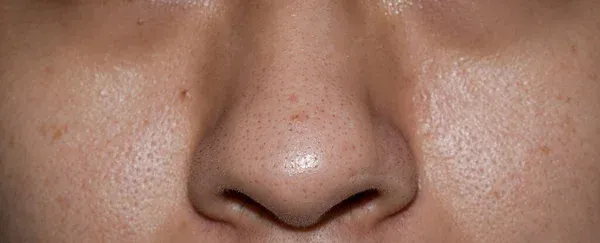
Enlarged pores often result from a combination of factors: sebaceous gland activity, collagen loss, acne-related changes, and localised skin laxity. In Singapore’s humid climate, oily skin and past breakouts can make this concern more pronounced.


Both microneedling and RF microneedling stimulate collagen to support skin firmness, which in turn can reduce the visibility of pores. However, the addition of radiofrequency energy makes RF microneedling more effective for concerns linked to deeper dermal laxity or sebaceous gland overactivity.


Treatment Considerations for Enlarged Pores


Scroll right to view more

Skin Profile More Suitable Option Rationale
Mild pore visibility Microneedling Stimulates collagen near the surface to refine texture
Moderate to severe pore enlargement RF Microneedling Adds thermal effect to remodel deeper support structures
Oily or acne-prone skin RF Microneedling May help modulate sebaceous gland activity with deeper thermal delivery
Post-inflammatory pore distortion RF Microneedling Targets dermal tissue affected by past inflammation

Clinical Insight: In skin with increased oil production, radiofrequency energy delivered via microneedling may improve both pore size and oil control. Treatment intensity and depth should be tailored to your skin type to avoid excessive stimulation or pigmentation risk.

Safety, Suitability, and Contra-Indications

When considering microneedling-based procedures, it is important to account for how your skin type responds to both mechanical stimulation and thermal energy—particularly in skin types more prone to pigmentation, such as Fitzpatrick III–V. These skin types have a higher tendency for post-inflammatory hyperpigmentation (PIH) if treatment parameters are not carefully adjusted [1][5].


Both microneedling and RF microneedling can be performed safely with appropriate techniques. Customisation may include selecting insulated microneedles, moderating energy levels, and spacing sessions to reduce surface trauma [1][2].


Common Contraindications


Scroll right to view more

Condition Clinical Concern Recommendation
Active cystic acne Increased risk of infection or inflammation Defer until lesions are resolved
Recent isotretinoin use Slower healing and sensitivity Postpone for at least 6 months
History of keloids Abnormal scar formation risk Avoid deeper microneedling or thermal treatment
Pregnancy or breastfeeding Hormonal changes and limited safety data Delay until postnatal
Implanted metal devices (for RF) Possible interference with radiofrequency energy Avoid RF-based treatments

Clinical Insight: Safe treatment planning in melanin-rich skin relies heavily on customisation. A clinician must consider pigmentation history, dermal thickness, and barrier recovery to select the appropriate depth and stimulation level.

Downtime, After-Care, and Expected Recovery

Microneedling-based treatments trigger controlled dermal micro-injuries to stimulate collagen remodelling. While both traditional and RF-assisted methods are non-ablative—that is, they preserve the outermost skin layer—your skin still requires short-term recovery support to restore its barrier function and reduce post-procedural inflammation.


The expected recovery timeline will depend on factors such as:


  • Needle depth
  • Energy settings (for RF)
  • Skin sensitivity and thickness
  • Treated area size and density

General Recovery Timeline


Scroll right to view more

Recovery Indicator Microneedling RF Microneedling
Redness duration 1–3 days 3–5 days
Swelling Mild Mild to moderate
Crusting or pinpoint marks Rare Possible (especially with deeper RF)
Dryness / Flaking Mild May last up to 1 week
Return to daily routine 24–48 hours 48–72 hours
Visible results appear After 3–4 weeks After 4–6 weeks (gradual change)
Session spacing Every 4–6 weeks Every 4–6 weeks

This schedule helps you plan treatments around work, events, or other aesthetic procedures that require downtime consideration.

After-Care Guidelines


Proper after-care supports skin healing, reduces irritation, and minimises the risk of post-inflammatory hyperpigmentation (PIH), particularly for individuals with Fitzpatrick III–V skin types.


Core Recommendations (for both Microneedling and RF Microneedling)


  • Cleansing: Wash the treated area gently with lukewarm water and a mild, fragrance-free cleanser for the first 48 hours.
  • Makeup Use: Avoid applying liquid makeup for at least 24 hours. Mineral-based makeup may be acceptable once redness subsides.
  • Moisturising: Apply a ceramide-rich moisturiser as often as needed to relieve dryness and support barrier repair.
  • Sun Protection: Use a broad-spectrum sunscreen (SPF 50+) daily starting the next morning. Avoid direct sunlight for at least 7 days.
  • Avoid Exfoliants: Do not use retinoids, alpha-hydroxy acids (AHAs), beta-hydroxy acids (BHAs), or physical scrubs for at least 5–7 days.
  • Avoid Heat Exposure: Refrain from steam rooms, saunas, hot yoga, and strenuous exercise for at least 24 hours to prevent increased inflammation and perspiration.
  • Hand Hygiene: Wash your hands before touching your face or applying products to avoid introducing bacteria into open micro-channels.
  • Do Not Pick: Allow any flaking or crusting to shed naturally. Picking can lead to scarring or pigment changes.
  • Avoid Alcohol Consumption: Minimise alcohol intake for 24 hours post-treatment to prevent additional inflammation.

Additional Notes for RF Microneedling


  • Redness and Swelling: Erythema (redness) and mild swelling are common for up to 3–5 days. Use a cool compress wrapped in a soft cloth if needed.
  • Pinpoint Crusting: Tiny scabs or crusts may appear at needle entry sites. Do not exfoliate or peel manually.
  • Cold Sore Risk: If you have a history of herpes simplex, speak to your doctor about preventive antiviral medication before treatment.
  • Deeper Tissue Response: Expect a more noticeable sensation of tightness or heat in the treated areas due to thermal stimulation.
  • Monitor for Adverse Signs: Contact your clinic if you experience persistent redness beyond 7 days, worsening pigmentation, severe itching, pustules, or any signs of infection.

When to Contact Your Doctor


Seek follow-up review if you experience:


  • Redness lasting beyond 7 days
  • Worsening pigmentation or dark patches
  • Heat, discharge, or pustules at treated sites

Tip: Photograph any abnormal reactions during healing. These help your doctor assess whether intervention is required.


Cost Comparison in Singapore

Microneedling and RF microneedling are administered under medical supervision in Singapore. While both support collagen remodelling, the cost of treatment varies depending on device capabilities, concern severity, and session complexity. RF Microneedling procedures tend to cost more per session due to the advanced technology and specialised equipment involved.

Session count and total cost may vary depending on the treatment area, technique combination, and your skin’s response over time.

Who Should Consider Each Treatment?

Microneedling and RF microneedling share the goal of collagen stimulation but differ in treatment depth and intensity. Your choice depends on concern severity, downtime preference, and whether additional thermal stimulation is needed for deeper remodelling.


Decision Matrix: Matching Skin Concerns to Technique

Scroll right to view more

Skin Concern Suggested Approach Notes
Fine lines, early laxity Microneedling Best for surface-level collagen induction
Mild rolling or boxcar scars Microneedling Suitable for shallow irregularities
Moderate-to-deep scars RF Microneedling Allows deeper dermal stimulation; may require adjuncts
Mixed acne scar types RF Microneedling ± Additional Techniques Often combined with subcision or TCA CROSS
Enlarged pores in oily skin RF Microneedling Supports dermal tightening and oil regulation
Uneven tone / dullness Microneedling or Skinboosters Improves hydration and texture

???? For complex or mixed concerns, staged or combination treatments may be recommended during consultation.

Summary

Microneedling and RF microneedling support collagen remodelling and textural improvement, with wide clinical application across dermatology concerns. Microneedling may be appropriate for mild or surface-level concerns. RF microneedling extends this by delivering thermal energy deeper into the dermis, which can be more beneficial for persistent acne scarring, enlarged pores, or oil-prone skin.


Rather than comparing them as equal alternatives, consider them as techniques that can be used selectively—or even complementarily—based on your skin’s structure and recovery capacity.


A detailed clinical consultation helps map out the type and distribution of scars, sebaceous activity, and pigmentation risk to guide individualised treatment planning.


Disclaimer: Information on this page is for educational purposes and does not replace a personalised consultation. Individual results vary. All medical procedures carry risks and possible side-effects; speak to an MOH-licensed doctor to assess suitability.


References


  • [1] Choi SY, Lee SM, Oh SH. Efficacy and safety of microneedling radiofrequency in acne scars: A prospective study in 44 patients with Fitzpatrick skin types III–V. PubMed Central
  • [2] Kobayashi T, Narita Y, Oiso N. Radiofrequency Microneedling: A Comprehensive and Critical Review. Dermatol Surg. 2021. PubMed
  • [3] Studies support microneedling efficacy for acne scarring: A systematic review of 33 studies. Dermatology Times
  • [4] Fractional Radiofrequency Microneedling is a Safe Monotherapy for Acne Scarring. Dermatology Times
  • [5] Kim SY, Kim MH. Microneedling in Dermatology: A Comprehensive Review. J Clin Aesthet Dermatol. 2024. PubMed Central

Latest Posts
AURA Clinic Featured in CNA Lifestyle | Dr. Karen Soh
Dr Karen Soh on Jewellery & Legacy | Tatler Singapore
Dr. Karen Soh Featured in ICON Singapore | AURA Clinic
Dr. Karen Soh Featured in Prestige Singapore | AURA Clinic
Dr. Karen Soh on HIFU & Ultherapy | AURA Clinic Singapore
Doctor-Led Hair Restoration in Singapore | AURA Trichocare
First-Time Aesthetic Treatment Guide | AURA Clinic Singapore
Ageing Well with Dr. Karen Soh | AURA Clinic Singapore
Female Pattern Baldness: Causes, Symptoms, and Effective Treatments
Male Pattern Baldness: Causes, Stages and Treatments
Patchy Hair Loss: Causes, Symptoms and Treatment Options
Dutasteride Injections: What Patients Should Know About This Off-Label Hair Loss Approach
References Saceda-Corralo D, Moustafa F, Moreno-Arrones Ó, et al.Mesotherapy With…
Semaglutide for Weight Loss; Everything You Need to Know
Understanding How HIFU and RF Affect Facial Fat: Risks, Benefits, and Differences
Menopause and Hair Loss: Understanding the Hormonal Connection
Hair Shedding vs Hair Loss: When Should You Be Concerned?
Scarring Alopecia: What It Is, Types, and How to Treat It
Hair Transplant Aftercare: Essential Tips for Faster Healing and Optimal Results
Types of Hair Transplant for Men and Women
Common Reasons Why Your Scalp Itches and How to Find Relief
Best HydraFacial Experience in Singapore at AURA Medical Aesthetics
Overseas vs. Singapore: Considerations for Aesthetic Treatments 
Tweakment Timeline: Aesthetic Treatments Guide from 20s to 60s in Singapore
Hyaluronic Acid vs. Biostimulatory Fillers in Singapore: A Comparison Guide
Pico Laser Treatment Price: Why Costs Vary Between Clinics?
How Pico Laser Wavelengths Work: A Guide To What Each Wavelength Targets
Jaw (Masseter) Injections for Facial Slimming: What Is It & What to Expect
Ultherapy vs. HIFU vs. Thermage: What Are They & How Do They Work?
RF Microneedling vs Microneedling in Singapore: Treatments for Acne Scars and Enlarged Pores
CoolSculpting in Singapore: How It Works, Benefits, and Common Treatment Areas
Is Ultherapy Worth It If You Do Not See Results?
Stabilised Hybrid Hyaluronic Acid (HA) vs Polynucleotide (PN) vs Other Skin Boosters: Which Is Better?
What Is Pico Laser? A Guide to the Technology, Its Benefits and Uses
Ultherapy: Development, Approved Uses,  Alternatives & FAQs
Anti-Wrinkles Injections: What It Is, Brand Types, and 6 Benefits
Related Treatments

No related treatments found.

Embrace your journey to beauty with AURA,
where your unique aura is celebrated and empowered.
Let us unveil your most beautiful self.

Seek subtle enhancements or extensive transformations? We’ll help you feel confident and empowered in your own skin. Speak to our experienced specialists to discover the best treatment plan for you.
Your journey begins here.

    Join our newsletter
    for expert insights on beauty.