TREATMENTS 08 July 2026

Patchy Hair Loss: Causes, Symptoms and Treatment Options

Patchy Hair Loss: Causes, Symptoms and Treatment Options

Noticing a sudden bald spot can feel alarming, especially when it seems to appear without warning. Patchy hair loss can affect the scalp, beard or brows, and the cause isn’t always the same for every person. According to Singapore’s National Skin Centre, hair grows in cycles, and some daily shedding is normal. However, losing more than 100 hairs a day or seeing clear patches may need medical review.

Some cases relate to immune conditions, infections, stress or hair habits. Understanding the underlying cause behind these changes is the first step toward managing your hair health safely. Keep reading to learn the common causes, warning signs and treatment options.

What is Patchy Hair Loss?


Patchy hair loss happens when hair falls out in clear, localised areas instead of thinning evenly across the scalp. These patches may appear on the scalp, beard, eyebrows or other hair-bearing areas, and they often look round or oval. Unlike gradual thinning, patchy baldness may develop more suddenly and in specific spots.

A 2022 local survey found that hair loss was a leading concern affecting over 44% of participants in Singapore. Possible causes include autoimmune conditions, fungal infections, stress-related shedding or hair-pulling habits.

.

Common Causes of Patchy Hair Loss


There are several distinct reasons for sudden changes in your scalp health, ranging from internal health factors to external environmental triggers. Knowing these differences helps ensure you receive care tailored to your condition.

Autoimmune Conditions – Alopecia Areata


Alopecia Areata is a condition where your body’s immune system mistakenly targets your own hair follicles. This typically results in smooth, coin-sized areas of patchy alopecia that can appear quite suddenly. Data suggests that the incidence of alopecia areata is approximately 3.8%, with many individuals noticing their first patches around the age of 25.

Key things to know:

  • Hair loss is non-scarring, meaning follicles are still intact, and regrowth is possible

  • It can affect one area or multiple patches at once.

  • In some cases, it can progress to complete scalp or body hair loss.

  • It's commonly associated with other autoimmune conditions like thyroid disease.

Fungal Infections


Fungal infections, such as tinea capitis (scalp ringworm), are highly contagious and can lead to scaly, itchy patches on the scalp. While tinea capitis mostly affects children between ages 3 and 7, a 2024 review found that adults still account for up to 11% of cases worldwide, particularly those with weakened immune systems.

There are two forms to be aware of:

Type Characteristics
Non-inflammatory Scaly patches, hair breakage, mild symptoms; rarely causes permanent loss
Inflammatory (kerion) Painful, pus-filled patches can cause scarring and permanent hair loss if untreated


Hair Pulling Disorder


Hair-pulling disorder, also called trichotillomania, involves a repeated urge to pull out one’s own hair from the scalp, eyebrows, eyelashes, or other areas. This happens often without full awareness that they’re doing it. Over time, this creates irregular, uneven bald patches.

According to the Merck Manual, the lifetime prevalence of trichotillomania is estimated at 0.6% to 2.2%, with onset most commonly occurring just before or after puberty. In clinical samples, approximately 80–90% of adults with the condition are female.

The key characteristics of hair-pulling disorder include:

  • A repetitive urge to pull hair, often triggered by stress or anxiety

  • Temporary relief after pulling, followed by guilt or distress

  • Visible patchy hair loss in areas that are easy to reach

  • Attempts to stop, but has difficulty doing so

Scarring (cicatricial) alopecias


Scarring alopecias are a group of conditions where inflammation destroys hair follicles and replaces them with scar tissue. Unlike most other types of patchy hair loss, this damage is permanent, which makes early diagnosis critical.

There are several distinct types:

  • Lichen Planopilaris (LPP)

    This inflammatory condition damages hair follicles and leads to progressive patchy hair loss. You may notice redness and scaling around affected follicles as inflammation builds.

  • Frontal Fibrosing Alopecia (FFA)

    Doctors consider FFA a variant of LPP. It causes a slow, even recession of the frontal hairline. It most often affects postmenopausal women but can occur in other groups as well.

  • Central Centrifugal Cicatricial Alopecia (CCCA)

    This condition usually starts at the crown and spreads outward studies report it more often in women of African descent, and it may link to certain hair care practices, although research continues to explore the exact cause.

Rare but important to recognise:

  • Discoid Lupus Erythematosus (DLE)

    • DLE causes well-defined scaly plaques that may change skin colour and damage follicles. In some cases, up to 25% or 30% of patients may later develop systemic lupus erythematosus (SLE). Symptoms such as facial rash, mouth ulcers, sun sensitivity or joint pain may suggest broader disease involvement and need medical review.
  • Secondary Syphilis: This infection can sometimes cause a ‘moth-eaten’ pattern of patchy hair loss. A clinical review reports this pattern in about 4% to 12.5% of cases. It often appears with other signs, such as a body rash, swollen lymph nodes, or mucosal lesions.

    • This infection can sometimes cause a ‘moth-eaten’ pattern of patchy hair loss. A clinical review reports this pattern in about 4% to 12.5% of cases. It often appears with other signs, such as a body rash, swollen lymph nodes, or mucosal lesions.

Symptoms of Patchy Hair Loss


Symptoms of patchy hair loss vary depending on the underlying cause. Some people notice changes gradually, while others wake up to a bald patch seemingly overnight.

Here are the key symptoms to watch for:

Round or Oval Bald Spots

The most common sign of this condition is the sudden appearance of smooth, coin-sized areas of patchy baldness. While the skin in the patch generally looks healthy and uninflamed, you might notice short, broken hairs at the edges.

Hair Loss in Specific Areas

While many people focus on the scalp, localised thinning can occur on any hair-bearing part of the body. According to the National University Hospital (NUH), patchy hair loss may affect not only the scalp but also the beard and eyebrow areas. This can result in gaps in facial hair or a thinning of the outer edges of the brows. In some scenarios, a person may notice their eyelashes falling out in small clusters or patches on their arms and legs.

Tingling or Itching Before Hair Loss

Your body may provide a warning; some individuals report a slight tingling or itchy feeling on the scalp just before a patch becomes visible. While many people experience no physical sensation at all, others describe a mild burning or ‘pins and needles’ feeling in the affected area. This sensory change occurs as inflammation affects the hair follicle from beneath the skin.

Other related symptoms to watch for include:

  • Tenderness or sensitivity when touching the specific area.

  • ‘Pitting’ or small dents and ridges in the fingernails.

  • Redness or warmth in the spot where hair is about to shed.

What you should do if you notice patchy hair loss?


Determining the exact cause of your hair loss is a systematic process that involves ruling out various health factors. A professional diagnosis ensures that you receive a targeted approach rather than a one-size-fits-all solution for your scalp health.

Below are common ways doctors assess hair loss:

Physical Examination of the Scalp

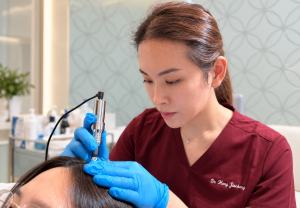
A scalp examination is often the first step in diagnosis. The doctor checks the pattern of hair loss, the skin surface and the condition of nearby hairs. They look for signs such as short broken hairs, redness, scaling or ‘exclamation point’ hairs, which can appear in alopecia areata. A dermatoscope, which is a handheld magnifying tool, may help the doctor view follicles more clearly.

They may assess:

  • The shape, size and smoothness of bald patches

  • Signs of inflammation, scaling or broken hairs

  • Eyebrows, eyelashes or other affected hair-bearing areas

Medical History Review

The doctor may ask when the shedding began, whether it happened suddenly and if it has happened before. They may also ask about stress, recent illness, diet changes, weight loss, medications and family history of hair loss.

Laboratory Tests

Doctors may request laboratory tests when they suspect an underlying condition. These tests can check for nutrient deficiencies, inflammation or medical issues linked with hair loss. Not everyone needs lab tests, so doctors usually decide based on symptoms and examination findings.

Blood Tests for Autoimmune or Hormonal Conditions

Blood tests may be useful when symptoms suggest thyroid disease, autoimmune conditions or hormonal imbalance. Common tests may include thyroid function, iron levels, vitamin D or markers of inflammation. In some cases, doctors may request additional tests based on your age, sex or medical history.

Scalp Biopsy or Fungal Testing

Some cases need more specific tests when the cause remains unclear. A scalp biopsy involves taking a small skin sample under local anaesthetic for microscopic review. Doctors may use this test to check for scarring alopecia or inflammation. If they suspect fungal infection, such as ringworm, they may take hair samples, skin scrapings or use a potassium hydroxide (KOH) test.

These tests can show:

  • Fungal elements or infection

  • Whether follicles remain active or show scarring

  • The type of inflammation affecting the scalp

Hair Transplant


Doctors may consider a hair transplant when patchy hair loss leads to permanent follicle damage, such as in advanced scarring alopecia. The procedure moves healthy hair follicles from a donor area to the affected scalp. Doctors extract individual follicles and implant them into targeted areas to match natural growth direction. However, do note that hair transplant can only be done in certain scarring alopecias only when the disease is stable and in its quiescent phase.

Can Patchy Hair Loss Grow Back?


Whether hair grows back depends on whether the follicles have been permanently damaged or simply placed into a resting state. According to clinical references from NCBI, many people with alopecia areata experience spontaneous regrowth within one year, although the condition can return in some cases.

Key points about regrowth include:

Early regrowth

New hair often appears as fine, light vellus hair before it thickens and regains colour over time.

Non-scarring conditions

Stress-related shedding or autoimmune patchy hair loss often allows regrowth because follicles remain intact.

Scarring conditions

When scar tissue replaces follicles, natural regrowth usually doesn’t occur.

When to See a Doctor


Knowing when to get a medical review often depends on how fast changes appear and what signs show on the scalp. Some hair shedding follows a normal cycle, but certain patterns of hair loss may point to an underlying condition that needs proper assessment.

Consider a medical review if you notice:

Sudden bald patches appear

Smooth, round bald areas that develop overnight or over a very short period may need clinical assessment.

Hair loss spreads quickly

Hair loss that expands or shows multiple new areas over a short time may indicate an active condition.

Associated scalp redness, scaling, or itching

When thinning comes with ongoing irritation, it may suggest a fungal infection or a scarring type of hair loss rather than simple autoimmune-related shedding.

Hair loss in children

Any noticeable hair loss in children should be checked to rule out infections or nutritional deficiencies.

FAQ

Sudden patchy hair loss is often linked to specific conditions rather than normal shedding. Common causes include autoimmune conditions like alopecia areata, fungal infections, hair-pulling behaviour and, in some cases, scarring disorders. Each cause affects the hair follicle in a different way, so proper assessment matters.

It depends on the cause. Non-scarring conditions, such as alopecia areata or stress-related shedding, may allow hair to grow back because the follicles remain intact. Scarring types damage the follicles permanently, which can lead to lasting hair loss.

Stress can play a role, but it is not always the main cause. It may trigger or worsen certain types of hair loss, including alopecia areata or hair-pulling behaviour. On its own, stress more often leads to general shedding rather than clear bald patches.

The duration varies based on the underlying condition. Some cases may improve within months, while others can persist or recur over time. Many types require medical treatment to control the cause and support regrowth.

Management depends on the cause, such as antifungal medication for infections or anti-inflammatory treatment for autoimmune conditions. A doctor will choose the approach based on diagnosis, severity and how the condition responds over time.

Latest Posts
Female Pattern Baldness: Causes, Symptoms, and Effective Treatments
Male Pattern Baldness: Causes, Stages and Treatments
Patchy Hair Loss: Causes, Symptoms and Treatment Options
Dutasteride Injections: What Patients Should Know About This Off-Label Hair Loss Approach
References Saceda-Corralo D, Moustafa F, Moreno-Arrones Ó, et al.Mesotherapy With…
Semaglutide for Weight Loss; Everything You Need to Know
Understanding How HIFU and RF Affect Facial Fat: Risks, Benefits, and Differences
Menopause and Hair Loss: Understanding the Hormonal Connection
Hair Shedding vs Hair Loss: When Should You Be Concerned?
Scarring Alopecia: What It Is, Types, and How to Treat It
Hair Transplant Aftercare: Essential Tips for Faster Healing and Optimal Results
Types of Hair Transplant for Men and Women
Common Reasons Why Your Scalp Itches and How to Find Relief
Best HydraFacial Experience in Singapore at AURA Medical Aesthetics
Overseas vs. Singapore: Considerations for Aesthetic Treatments 
Tweakment Timeline: Aesthetic Treatments Guide from 20s to 60s in Singapore
Hyaluronic Acid vs. Biostimulatory Fillers in Singapore: A Comparison Guide
Pico Laser Treatment Price: Why Costs Vary Between Clinics?
How Pico Laser Wavelengths Work: A Guide To What Each Wavelength Targets
Jaw (Masseter) Injections for Facial Slimming: What Is It & What to Expect
Ultherapy vs. HIFU vs. Thermage: What Are They & How Do They Work?
RF Microneedling vs Microneedling in Singapore: Treatments for Acne Scars and Enlarged Pores
CoolSculpting in Singapore: How It Works, Benefits, and Common Treatment Areas
Is Ultherapy Worth It If You Do Not See Results?
Stabilised Hybrid Hyaluronic Acid (HA) vs Polynucleotide (PN) vs Other Skin Boosters: Which Is Better?
What Is Pico Laser? A Guide to the Technology, Its Benefits and Uses
Ultherapy: Development, Approved Uses,  Alternatives & FAQs
Anti-Wrinkles Injections: What It Is, Brand Types, and 6 Benefits

Embrace your journey to beauty with AURA,
where your unique aura is celebrated and empowered.
Let us unveil your most beautiful self.

Seek subtle enhancements or extensive transformations? We’ll help you feel confident and empowered in your own skin. Speak to our experienced specialists to discover the best treatment plan for you.
Your journey begins here.

    Join our newsletter
    for expert insights on beauty.