TREATMENTS 25 JUN 2025

Understanding How HIFU and RF Affect Facial Fat: Risks, Benefits, and Differences

Understanding How HIFU and RF Affect Facial Fat: Risks, Benefits, and Differences

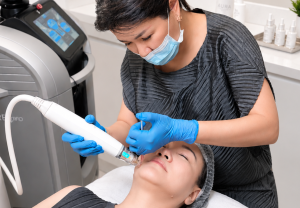
In Singapore, energy-based aesthetic treatments such as High-Intensity Focused Ultrasound (HIFU) and Radiofrequency (RF) are commonly used to lift sagging skin, tighten contours, or refine the jawline—without surgery or extended downtime.


While both treatments promote collagen production and progressive skin rejuvenation, they also raise an important question:


Can these treatments reduce facial fat—and is that outcome a benefit or a drawback?


Fat loss is not always desirable. Whether it contributes to or detracts from your appearance depends on your facial anatomy, baseline volume, and treatment goals. In certain cases, modest fat reduction—especially around the jawline—can sharpen contours and enhance facial definition. However, if your face is naturally slim, already showing signs of volume loss, or if you prefer to maintain soft, youthful features, unintended fat reduction in areas such as the cheeks or temples may be counterproductive.


This guide explains:


  • How HIFU and RF interact with skin, connective tissue, and fat layers
  • When fat reduction may be intended—and when it becomes an unwanted effect
  • Why treatment depth, frequency, and facial profile matter
  • How to safely tailor energy-based treatments for lifting or sculpting

This content is especially relevant if:


  • You are naturally lean or have noticed facial volume loss
  • You have previously undergone treatments such as injectables, buccal fat removal, or frequent energy-based facials
  • You are considering options to slim your face, define your jawline, or tighten specific facial areas

Whether you want to reduce fat or preserve volume, this guide will help you plan an informed path forward.

HIFU vs RF – How Each Treatment Works on Skin and Fat

High-Intensity Focused Ultrasound (HIFU) and Radiofrequency (RF) are two commonly used non-surgical energy-based treatments for skin lifting, tightening, and facial contouring in Singapore. While both trigger collagen remodelling through heat-induced stimulation, they act on different tissue depths and interact with fat in distinct ways.

Understanding their mechanisms can help you choose the right treatment based on your goals—whether lifting sagging skin or refining facial volume.

For a detailed comparison between these technologies, including Ultherapy, see this guide on Ultherapy vs HIFU vs Thermage.

How HIFU Works – Deep Lifting with Focused Energy


Main Image

The energy heats small, pinpointed zones to temperatures between 60°C and 70°C, typically reaching depths of 3.0 mm to 4.5 mm— levels that intersect with both connective tissue and subcutaneous fat. A study on HIFU’s effects on varying fat layer thicknesses confirmed that energy depth and fat density significantly influence how HIFU behaves in different facial zones.


At this depth, HIFU targets the Superficial Musculoaponeurotic System (SMAS)—a foundational connective tissue layer often addressed in surgical facelifts. A study on SMAS layer targeting with microfocused ultrasound demonstrated measurable improvements in skin laxity and tightening, supporting the use of focused ultrasound for non-invasive facial lifting.


This thermal stimulation triggers collagen regeneration (neocollagenesis) and leads to gradual skin tightening and lifting over time.


In medical-grade systems such as Ultherapy, real-time visualisation (Micro-Focused Ultrasound with Visualisation, or MFU-V) enhances safety by mapping skin thickness and fat distribution. Its targeted approach to tissue depths allows energy to be focused precisely at layers associated with collagen regeneration while avoiding unnecessary damage to adjacent fat structures.


Clinical Considerations for HIFU:


  • Best suited for moderate skin laxity and lifting deeper facial structures.
  • Precision is essential—especially in lean faces or post-weight-loss patients.
  • Risk of unintended fat loss is higher when energy extends beyond the SMAS into fat layers.
  • Common areas of concern: midface, temples, and under-eye region.

High-Risk Areas for RF Fat Impact:


Main Image

Radiofrequency (RF) delivers thermal energy through electrical current. It heats the dermis and, depending on the device and settings, can extend into subcutaneous fat layers. Peak temperatures usually range from 40°C to 45°C.


RF comes in various configurations, each with different depth and impact:


  • Monopolar RF (e.g., Thermage): Deep penetration (~4 mm), broad heating.
  • Bipolar/Multipolar RF: Shallower delivery; often used for general firming.
  • Fractional RF Microneedling (e.g., Potenza, Morpheus8): Penetrates dermal and subdermal layers via microchannels, allowing focused delivery and skin resurfacing.

Unlike HIFU, RF disperses heat more diffusely across the treated area, which increases the potential for superficial fat disruption—especially in thin or volume-depleted areas.


High-Risk Areas for RF Fat Impact:


  • Mid-cheek (buccal fat pad)
  • Infraorbital (under-eye)
  • Nasolabial folds / perioral zone

Clinically, some users report subtle, progressive hollowing after multiple RF sessions. These changes may appear over months and are sometimes mistaken for natural ageing.

HIFU vs RF – Key Differences in Fat Interaction

Scroll right to view more

Feature HIFU RF
Energy Type Focused ultrasound Electrical current
Peak Temperature ~60–70°C ~40–45°C
Target Depth 3.0–4.5 mm (SMAS) 1.5–4.0 mm (dermis + fat)
Energy Distribution Pinpointed, precise thermal zones Diffuse, broader heating
Fat Interaction Low–moderate (if depth is controlled) Moderate–high (if settings are not adapted)
Cumulative Risk With repeated deep passes With overlapping sessions or intensity
Real-Time Imaging Available (e.g., Ultherapy MFU-V) Rare

Key Takeaway:


HIFU: Suitable for deeper structural lifting and skin tightening. Precision is critical in lean or low-fat faces to avoid unintended fat loss.

RF: Effective for surface-level firming and mild contouring, but more likely to impact superficial fat layers if not personalised.


How to Ensure a Safe and Effective Outcome


Treatment success is not just about the device—it depends on clinical judgement, treatment mapping, and anatomical customisation.


  • Ask your provider if facial mapping and fat layer depth assessment will be performed before treatment.
  • Discuss your history of aesthetic treatments, weight changes, or volume loss to tailor settings appropriately.

Where Fat Loss Is Controlled vs Unintended

HIFU and RF treatments can both lead to facial fat reduction—but the outcome is not always beneficial. In aesthetic contouring, small, controlled fat loss may be intentional. In other cases, volume loss may be unintended, especially when treatments are not adjusted to a patient’s facial anatomy or fat distribution.

Understanding the distinction between targeted sculpting and unwanted atrophy is essential—especially for lean individuals, or those with prior fat-reducing procedures.

When Fat Reduction Improves Facial Contours


In selected areas, reducing facial fat can enhance definition and restore facial balance. Common scenarios include:


  • Submental (under-chin) fullness creating a less defined jawline
  • Heavy lower cheeks that obscure natural bone structure
  • Localised bulk in the buccal or jaw angle areas contributing to facial roundness

When applied strategically—using appropriate energy depth and intensity—HIFU or RF may refine these zones without affecting surrounding supportive fat.


Example: A monopolar RF session planned to reduce submental volume in a patient with a rounder lower face can improve profile contour, provided nearby structures like the cheeks or midface are not compromised.


When Fat Reduction Is Unwanted


Certain facial compartments—such as the mid-cheek, temples, and under-eye region—provide critical volume for support and youthfulness. If energy penetrates these zones too deeply or is applied repeatedly, the risk of soft tissue thinning increases. Volume loss in these areas can lead to:


  • Hollowed cheeks
  • Deepened tear troughs
  • Skeletal contours near the temples
  • Exaggerated smile lines and early facial sagging

Such outcomes are more likely in naturally slim individuals, post-weight loss patients, or those with a history of buccal fat removal or frequent facials involving energy-based devices.


Example: A patient receiving overlapping RF microneedling sessions in the mid-cheek may experience gradual hollowing, even if each individual session seems well-tolerated.


Why Device Technique Must Match Your Anatomy


Facial rejuvenation is not simply about tightening loose skin or slimming full areas—it is about protecting the underlying structure that defines your natural proportions.


Energy-based treatments like HIFU and RF must be calibrated to your unique anatomy. In the right zones, selective fat reduction can enhance contour. In others, preserving fat is critical to avoid hollowing or imbalance.


Understanding this distinction empowers you to:


  • Set realistic, goal-specific expectations for lifting or contouring
  • Avoid over-treatment in areas that require volume support
  • Ask your doctor the right questions about fat preservation zones and custom energy settings

Clinical Insight:
“The same device, when used at the wrong depth or too frequently, can sculpt or hollow— your provider’s precision makes all the difference.”

Facial Zones Most Affected by HIFU or RF

HIFU and RF treatments are adaptable—but results vary dramatically based on treatment depth, zone, and patient anatomy. Some areas respond well to fat reduction, while others rely on preserved volume for facial support. This is why zone-based treatment planning is critical.


Why Zone Selection Matters in Energy-Based Treatments


Each facial region differs in:


  • Skin thickness
  • Fat distribution
  • Structural support needs

Delivering energy without accounting for these differences may result in:


  • Beneficial contouring in fat-rich zones
  • Hollowing or sagging in volume-critical areas

Where HIFU and RF Affect Facial Fat – Zone-by-Zone Guide

Scroll right to view more

Facial Zone Typical Treatment Goal Fat Loss Risk (HIFU) Fat Loss Risk (RF) Treatment Notes
Submental (under chin) Reduce double chin Likely (intentional) Likely (intentional) Often treated with deeper HIFU or monopolar RF for jawline contouring
Jawline / jowls Refine angle, reduce heaviness Moderate (if repeated) Intended (if mapped well) Effective zone for sculpting; requires control to avoid laxity or overcorrection
Lower cheeks / midface Lift, firm, or reduce bulk Elevated in lean patients Moderate (especially with monopolar) Risk of hollowing if energy depth is not adjusted for facial fat and skin thickness
Buccal / mandibular angle Reduce lower face fullness Case-dependent Effective for contouring Suitable for fractional RF in select profiles; avoid in volume-deficient faces
Temples / periorbital Smooth texture, reduce laxity High (not recommended) High (not recommended) Avoid deep or frequent passes in these thin-skinned, low-fat areas
Nasolabial folds Soften fold depth Moderate (if overly deep) Moderate (with repeated sessions) Volume loss here can deepen folds—preserve support tissue when possible
Forehead Rarely treated Rarely applicable Elevated (if treated) Volume loss risk; generally avoided with energy-based devices

Key Considerations for Zone-Based Treatment Planning


  • Same device, different outcomes: Energy must match the zone’s structural profile.
  • Fat is functional: It maintains softness in critical regions such as the midface and temples.
  • Lean faces need conservative protocols: Over-treatment risks visible deflation.

At AURA Clinic, your facial structure is fully assessed before any HIFU or RF session. We perform:


  • Skin and fat depth mapping
  • Device selection and calibration by zone
  • Volume preservation planning for long-term outcomes

When Fat Reduction Is the Goal – How to Use HIFU or RF Strategically

Not all facial fat loss is problematic. In specific clinical scenarios, controlled volume reduction can improve contour, reduce bulk, and create a more defined appearance. Treatments like HIFU and RF can be calibrated to shrink localised fat pads while preserving volume in structurally important areas.

When Fat Reduction Improves Facial Contours


Patients with submental fullness, lower face heaviness, or a round jawline may benefit from energy-based contouring. When applied with anatomical accuracy, HIFU and RF can:


  • Sculpt the jawline
  • Reduce double chin volume
  • Soften jowls or lower cheek bulk

Scroll right to view more

Clinical Concern Recommended Energy Strategy
Submental fat (under chin) HIFU or monopolar RF targeting submental zone
Jawline heaviness or jowls Monopolar RF applied with mapped endpoints
Buccal or midface fullness Fractional RF microneedling (case-specific)
Soft tissue bulk at jaw angle RF for targeted mandibular angle slimming

Note: Each zone requires customised control of energy depth, intensity, and frequency to avoid affecting supportive fat layers nearby.

How Energy-Based Contouring Works Safely


The effectiveness—and safety—of using HIFU or RF for fat reduction depends on precise treatment planning. Unlike standardised protocols, fat-reduction strategies must account for:

Scroll right to view more

Treatment Variable Why It Matters
Device Type HIFU targets deeper layers (SMAS); RF acts on dermis and subcutaneous fat
Energy Intensity Higher energy = deeper heat = higher risk of unintended atrophy
Treatment Depth Must align with fat pad thickness to avoid reaching supportive compartments
Patient’s Fat Profile Leaner faces require conservative settings to avoid hollowing
Session Frequency Repeating sessions too soon compounds thermal effects and can lead to deflation

Clinical Insight: “Strategic fat reduction is not about removing volume—it’s about reshaping selectively while maintaining harmony across the entire facial structure.”

A Tailored Strategy, Not a Standard Protocol


At AURA Clinic, your contouring treatment is built on more than aesthetics—it is guided by:


  • 3D anatomical fat compartment mapping
  • Evaluation of your skin thickness and laxity patterns
  • Review of any past treatments involving fat reduction, RF, or HIFU

If your facial structure does not call for fat reduction, your plan will prioritise skin tightening while protecting volume in high-support zones. The focus is on refinement without overcorrection— delivering natural contour while maintaining structure.

When You Want to Preserve Volume – What to Ask Your Doctor

If your face is naturally lean, angular, or already showing signs of age-related deflation, preserving facial fat is not optional— it is essential. While HIFU and RF are popular for lifting and tightening, they can also reduce fat unintentionally if applied without careful planning.


This section helps you understand:


  • Why volume preservation requires deliberate treatment design
  • Who is more vulnerable to volume loss
  • What to ask during consultation to protect facial balance

Why Volume Preservation Deserves a Treatment Plan


Facial fat provides more than volume—it acts as a supportive structure for soft tissue, maintains youthful contours, and prevents features from appearing harsh or sunken.


However, age, weight loss, and overuse of energy-based treatments can reduce these fat compartments. If HIFU or RF is applied without accounting for this, the result may be:


  • Hollowed cheeks or temples
  • Sharper, tired facial features
  • Premature ageing appearance—even if skin tightens

Scroll right to view more

Fat Zone Effect of Fat Loss
Midface (cheeks) Flattened profile, deeper nasolabial folds
Temples Hollowing, skeletal appearance
Under-eyes Shadowing, dark circles, tired look

These effects are preventable—but only with personalised planning that includes:


  • Energy intensity control
  • Depth targeting for each facial zone
  • Limiting high-risk areas like under-eyes and temples
  • Spacing sessions to allow for tissue recovery


Who Is More at Risk of Volume Loss?


You may be more prone to volume loss from HIFU or RF if:

  • Your facial structure is naturally slim or angular
  • You are over 35 and showing early midface or under-eye deflation
  • You had previous fat-reducing treatments (e.g. CoolSculpting, buccal fat removal)
  • You undergo routine energy facials without reassessment of skin/fat condition

In these cases, customised treatment protocols and zone avoidance strategies become non-negotiable.


What to Ask During Your Consultation


Bringing the right questions to your consultation improves safety and outcomes. These patient-directed queries help ensure your provider plans for preservation:

Scroll right to view more

Question Why It Matters
What energy depth will be used in each facial zone? Avoids unintended heating of fat compartments
How do you adjust protocols for low-fat or angular faces? Ensures conservative approach for high-risk patients
Will high-risk zones like temples or midface be avoided? Reduces risk of hollowing or facial deflation
How often is this treatment recommended for my facial profile? Prevents cumulative damage from excessive frequency
What are early signs of fat loss, and how do you monitor them? Enables early intervention if unintended atrophy develops

Doctor Insight: “Volume loss often appears 4 to 8 weeks post-treatment. That delay makes pre-mapping and structured follow-up critical—not optional.”

Treatment Planning at AURA Clinic


At AURA Clinic, your treatment is guided by structural protection—not just skin tightening goals. The protocol includes:


  • Facial mapping to identify fat pad thickness and skeletal support
  • Review of previous treatments affecting volume or skin resilience
  • Zone-specific protocols to avoid high-risk compartments
  • Progress tracking to detect even subtle changes in fat volume

Whether you are lifting sagging skin or treating early signs of ageing, your results should protect facial harmony—not compromise it.

Summary – HIFU vs RF for Facial Fat: What Suits Your Goal?

HIFU (High-Intensity Focused Ultrasound) and RF (Radiofrequency) offer different mechanisms of action—but both can support facial rejuvenation when matched carefully to your facial anatomy, fat distribution, and aesthetic priorities.

Choosing the right approach is not about device type or popularity. It is about knowing whether fat needs to be preserved or reduced—and adjusting treatment accordingly.


When Is Fat Reduction Appropriate?


Fat reduction may enhance results if your goal is to:


  • Sculpt the jawline
  • Reduce submental fullness
  • Soften bulky jowls or lower cheeks

In these cases, targeted energy to deeper fat compartments can refine contours and improve structural definition— only if planned with precision.


When Should Volume Be Preserved?


If you have:


  • Naturally slim or angular features
  • Prior signs of volume deflation
  • A history of fat-reducing treatments

Then preserving facial fat becomes essential to avoid hollowing, gauntness, or premature ageing.


The same device can lift or deflate—depending on where and how it is used.

Treatment Matching: Fat Reduction vs Volume Preservation


Use this matrix as a conversation guide during your consultation to clarify your goals:

Scroll right to view more

Aesthetic Goal Recommended Treatment Strategy
Lift skin with minimal fat loss HIFU with mapped depth control or superficial RF
Define jawline and reduce lower face bulk Monopolar RF or zone-specific HIFU
Slim jowls or lower cheeks RF microneedling spaced at safe intervals
Preserve cheek and temple volume Avoid deep passes in midface and temporal zones
Tighten under-eye without hollowing Use low-energy or switch to non-fat-reducing devices

Final Takeaways


  • HIFU targets deep layers such as the SMAS (superficial musculoaponeurotic system), making it suitable for lifting— but caution is required in lean faces.
  • RF spreads heat more broadly and is effective for dermal firming and subtle contouring— but may cause fat loss if not adjusted for skin thickness and fat depth.
  • Neither is superior by default. Outcome depends on the treatment plan—not just the device.

Personalised protocols, facial fat mapping, and energy calibration are the true difference-makers— not brand or technique alone.

Considering Treatment at AURA Clinic?

At AURA Clinic, your facial structure guides your treatment—not generic protocols. Every session includes:


  • A structural and fat compartment assessment before device selection
  • Identification of high-risk zones for fat loss
  • Custom depth and energy settings to match your goal
  • Post-treatment tracking to monitor outcomes and intervene early

Book a Consultation

Learn which approach—HIFU, RF, or a customised combination—supports your goals without compromising facial balance.

Latest Posts
Female Pattern Baldness: Causes, Symptoms, and Effective Treatments
Male Pattern Baldness: Causes, Stages and Treatments
Patchy Hair Loss: Causes, Symptoms and Treatment Options
Dutasteride Injections: What Patients Should Know About This Off-Label Hair Loss Approach
References Saceda-Corralo D, Moustafa F, Moreno-Arrones Ó, et al.Mesotherapy With…
Semaglutide for Weight Loss; Everything You Need to Know
Understanding How HIFU and RF Affect Facial Fat: Risks, Benefits, and Differences
Menopause and Hair Loss: Understanding the Hormonal Connection
Hair Shedding vs Hair Loss: When Should You Be Concerned?
Scarring Alopecia: What It Is, Types, and How to Treat It
Hair Transplant Aftercare: Essential Tips for Faster Healing and Optimal Results
Types of Hair Transplant for Men and Women
Common Reasons Why Your Scalp Itches and How to Find Relief
Best HydraFacial Experience in Singapore at AURA Medical Aesthetics
Overseas vs. Singapore: Considerations for Aesthetic Treatments 
Tweakment Timeline: Aesthetic Treatments Guide from 20s to 60s in Singapore
Hyaluronic Acid vs. Biostimulatory Fillers in Singapore: A Comparison Guide
Pico Laser Treatment Price: Why Costs Vary Between Clinics?
How Pico Laser Wavelengths Work: A Guide To What Each Wavelength Targets
Jaw (Masseter) Injections for Facial Slimming: What Is It & What to Expect
Ultherapy vs. HIFU vs. Thermage: What Are They & How Do They Work?
RF Microneedling vs Microneedling in Singapore: Treatments for Acne Scars and Enlarged Pores
CoolSculpting in Singapore: How It Works, Benefits, and Common Treatment Areas
Is Ultherapy Worth It If You Do Not See Results?
Stabilised Hybrid Hyaluronic Acid (HA) vs Polynucleotide (PN) vs Other Skin Boosters: Which Is Better?
What Is Pico Laser? A Guide to the Technology, Its Benefits and Uses
Ultherapy: Development, Approved Uses,  Alternatives & FAQs
Anti-Wrinkles Injections: What It Is, Brand Types, and 6 Benefits

Embrace your journey to beauty with AURA,
where your unique aura is celebrated and empowered.
Let us unveil your most beautiful self.

Seek subtle enhancements or extensive transformations? We’ll help you feel confident and empowered in your own skin. Speak to our experienced specialists to discover the best treatment plan for you.
Your journey begins here.

    Join our newsletter
    for expert insights on beauty.